


Yes, heat is included in your rent
This is the question our leasing team hears most, so here's the plain answer: heat and water are included in your monthly rent at Brickline North. There's no oil tank to fill, no furnace to service and no separate heating bill that climbs every January.
If you're coming from an older house or apartment in East Hants, that's a real change. In many older rentals, heat is the tenant's biggest and least predictable winter cost. Here, it's already built into one monthly number.

How in-floor radiant heat works
Brickline North uses a hydronic system. Warm water circulates through tubing embedded in each suite's concrete floor. The floor becomes one large, gentle radiator.
That changes how a home feels in winter:
- Even warmth. Heat comes from the whole floor, not one wall, so there are no cold corners far from the heater.
- No baseboards or vents. There's nothing blowing dust around and nothing dictating where your couch or bed can go.
- Warm floors. Bare feet on the bathroom floor in February is a very different experience.
- Quiet. No fan kicking on and off.
Radiant heat warms people and surfaces directly, a bit like sitting in the sun. Because the floor, furniture and walls are warm, rooms often feel comfortable at a slightly lower thermostat setting than a forced-air home.
Why ICF walls and concrete floors make it work
Radiant heat is only as good as the building around it. Brickline North was built for it.
- ICF exterior walls are a solid concrete core with foam insulation on both sides. They're far more airtight than a typical wood-frame wall, so the heat you're paying nothing extra for stays inside.
- Concrete floors store heat. Concrete has high thermal mass: it warms slowly and gives that heat back slowly. Temperatures stay steady through cold nights instead of swinging up and down.
- Concrete between every suite. Concrete floors and ceilings separate each home, which helps with both warmth and noise.
The result is a building that holds a steady temperature, rather than one that has to fight drafts all winter.
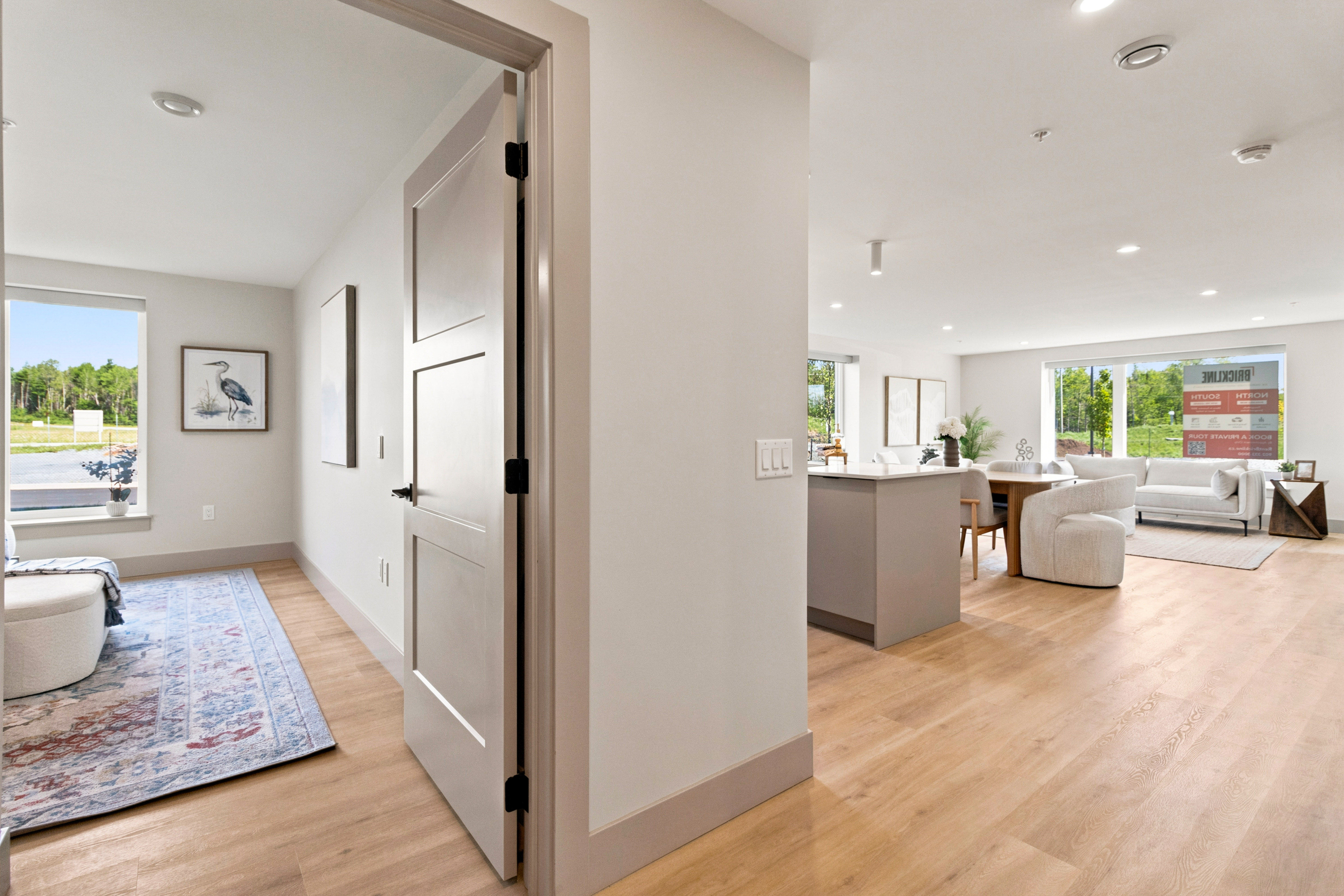
Tips for living with radiant heat
Radiant heat works a little differently from baseboards or a furnace. A few habits make it work best:
- Set it and leave it. Concrete takes hours to warm up or cool down. Big swings, like turning the heat way down during the day, don't save much and leave you waiting at night.
- Change it in small steps. Raise the setting a degree or two, then give it several hours before adjusting again.
- Expect warm, not hot. The floor feels pleasantly warm, not hot to the touch. That's normal and means the system is working.
- Go easy on thick rugs. Thin area rugs are fine. Thick, rubber-backed rugs slow heat from coming up through the floor.
Staying in East Hants, with less to manage
Most Brickline North residents already live in East Hants. They're moving from a house in Elmsdale, an older apartment in Enfield or a family home in Lantz. They want to stay close to family, work and community without the upkeep.
That's where in-floor heat fits in. No furnace, no oil deliveries, no drafty windows and no snow-blocked heat vents. JETCO builds, owns and manages Brickline North, so the same local team that built the heating system is the one looking after it.
FAQs about in-floor heating at Brickline North
Is heat included in the rent at Brickline North?
Yes. Heat and water are included in your monthly rent. You won't get a separate heating bill.
Is in-floor heating enough to heat a whole apartment?
Yes. In-floor radiant heat is the full heating system in every Brickline North suite, designed for Nova Scotia winters. There are no baseboard heaters or forced-air vents, and none are needed.
Will I be cold in my apartment in January?
No. The concrete floors hold heat and the ICF walls keep it in, so suites stay at a steady, comfortable temperature through the coldest weeks of the year.
Do I need a space heater with in-floor heating?
No. The system heats the whole suite evenly. If a room feels cool, raise the thermostat a degree or two and give it a few hours.
Why does in-floor heat take longer to warm up?
The heat is stored in the concrete floor, which warms slowly and stays warm longer. That's why the system works best at a steady setting.